

Introduction:
CPC Order 1 Rule 6 deals with those contracts, where multiple persons are involved and liable to the contract; in that case, the plaintiff has an option to join as parties to the same suit to all of them or any of the responsible persons severally who are liable to the contract.
Definition of Order 1 Rule 6 of the Civil Procedure Code, 1908:
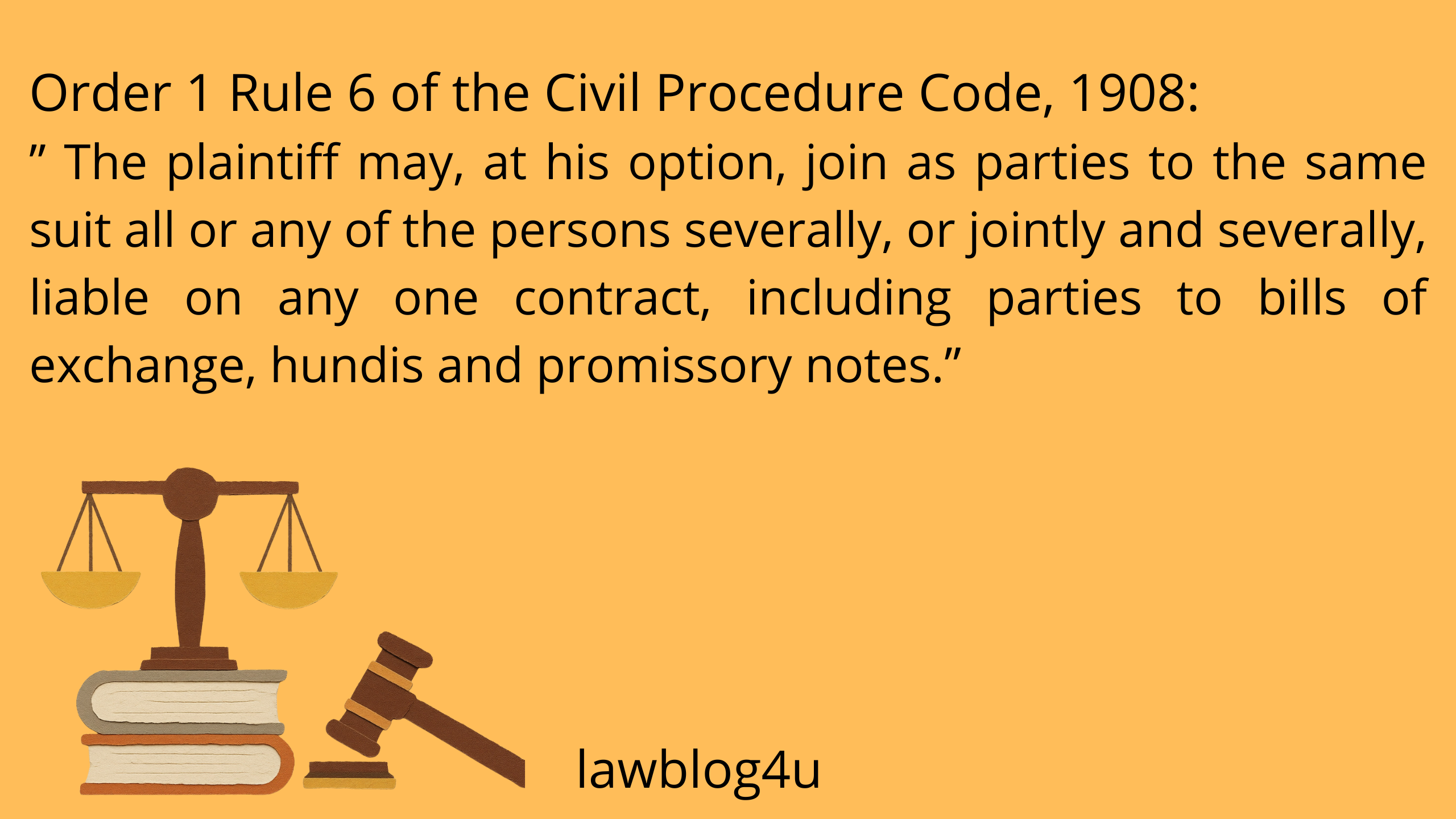
The Civil Procedure Code, 1908 Order 1 Rule 6, defines as,” The plaintiff may, at his option, join as parties to the same suit all or any of the persons severally, or jointly and severally, liable on any one contract, including parties to bills of exchange, hundis and promissory notes.”
Essential Legal Principles:
There are some essential legal principles of Rule 6 of Order 1, which are listed below:
Option for the Plaintiff:
If there are multiple persons involved and bound by a single contract, in that situation, the plaintiff cannot be forced to file a suit against all of them. Here, the plaintiff can elect to sue all or select persons who are directly responsible.
Let’s understand with an example:
If may persons involved and bound by the same contract, such as signatory parties of a promissory note, responsible partners of the firm. In that case, a plaintiff has a choice to select the liable persons to sue, or they can sue against all of them.
Joint and Several Liability:
This rule is deeply applied to contract law. It basically defined that liability under the same contract can be enforced against one or more responsible persons, without adding all liable persons to the court in the same proceeding.
Deference with Order 1 Rule 3 of CPC:
CPC Order 1 Rule 6 has a difference from Order 1 Rule 3. Rule 6 deals with those parties who are liable under the single contract, while Rule 3 deals with those parties who can be joined as defendants in a single suit, if they are directly related to the multiple transactions or common questions of law and fact are involved.
Read Also: