
Introduction :
The provision of CPC Order 1 Rule 4 gives a power to the court to grant judgment for or against some of the joint parties of the suit. Such a judgment can be passed without any amendment if the court thinks fit, and one or more plaintiffs are found entitled to the reliefs. Or one or more defendants found entitled to their liabilities and responsibilities. The court can pass the judgment without formal amendment. These provisions enable the court to pronounce the judgment based on individual entitlement and responsibilities, which can help to prevent unnecessary delays, especially in the event of misjoinder of parties in the civil litigation. The aim behind this provision is to ensure justice with efficiently to the suit parties.
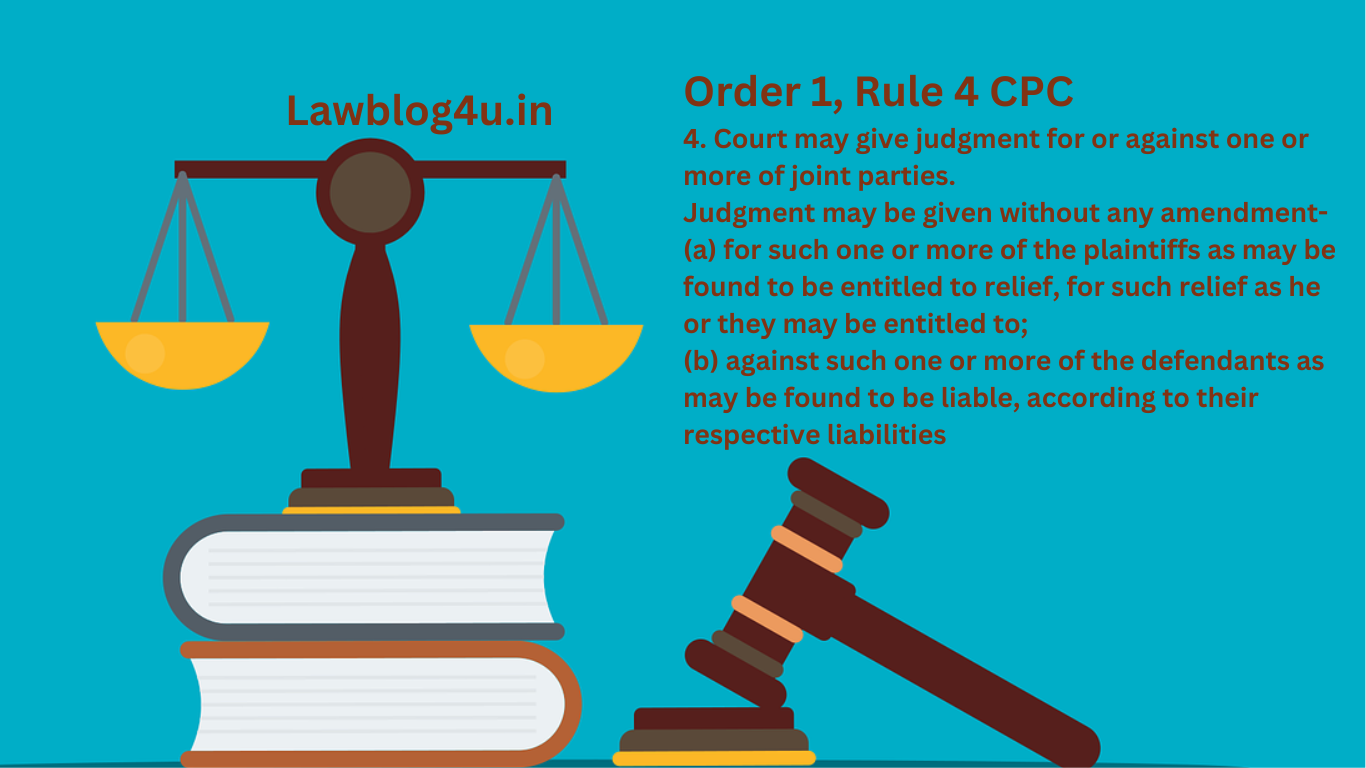
The essential elements of CPC order 1 Rule 4:
The court can pass judgment for some of the parties to the suit:
The provision of Order 1 Rule 4 of the Civil Procedure Code, 1908, enables the court to pass the judgement for one or more plaintiffs if they are found to be entitled. Or against one or more defendants if they are found to be liable for their responsibilities.
Without any amendment in the suit or plaint:
Initially, there is no requirement to amend the plaint or suit, to pronounce the judgment, in favore or one or more plaintiffs or against one or more defendants.
Aims to prevent an unnecessary delay:
This provision enables the court to pass the judgment, if they found the parties deserve to be grant reliefs or liable for their responsibilities. It may save unnecessary time-consuming court processes.
In final words:
Let’s see one example of Order 1 Rule of the CPC. Suppose Mr A files a civil suit together with 4 people. But, according to this provision, if the court thin fit only 2 people deserve to be responsible. The court can grant the relief to the 2 people and dismiss the suit against 2 parties who do not deserve any relief. In all these processes, the court can pass the judgment without amendment of the plaint or suit. The Order 1 Rule 4 CPC empower to the court to pass judgment on the basis of the merit of an individual party in the civil litigation.
Also Read:
Order 1 Rule 3 CPC: joinder of Defendant in a Suit
CPC Order 1 Rule 10: Provisions Of Adding or Removing Parties in Civil Proceedings
CPC Order 1 Rule 2: Power of Court to Order Separate Trials