
Introduction:
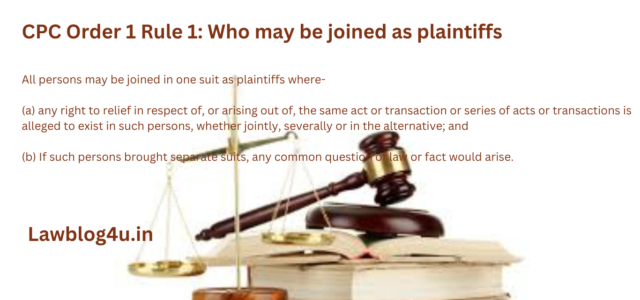
CPC Order 1, Rule 1 deals with the joinder of plaintiffs in a single lawsuit. The provision of the Civil Procedure Code, 1908 Order 1 Rule 1, allows more than one person to file a single suit if their cause of action comes from the same act or transaction, and their right to relief also belongs to the same, as well as the subject matter of the suit also includes a common question of law and fact.
The aims of the rule are to allow multiple plaintiffs to join in a single suit; it enables the avoidance of the multiplicity of proceedings and reduces the litigation time and cost.
Key Elements of CPC Order 1 Rule 1:
According to the provision of Order 1, Rule 1 of the CPC, all those persons may be joined as plaintiffs in a single suit if the following conditions are met.
Same Act or Transaction
The right to relief of the persons comes from the same act or transaction.
Common Question of Law or Fact
A common question of law or fact must be involved in the suit, which is filed by the persons.
Nature of Right to Relief
The nature of the right to relief would be involved in the same, combined or in the substitute.
Examples:
Let’s understand this concept with some examples:
Joint Agreement
Mr A and Mr B make a joint agreement with Mr C. If Mr C breach the contract, then both Mr A and Mr B can jointly file a lawsuit against Mr C as plaintiffs. Because here the cause of action arises from the same transaction.
Joint Tort/Assault
Mr A assaulted Mr B and Mr C; in that situation, they can file a lawsuit as co-plaintiffs against Mr A for the damages.
Related Rules under Order 1:
Rule 2 (Separate Trails)
If the court thinks fit, that the joinder of plaintiffs causes the delay in the trial, it can pass an order for a separate trial.
Rule 3 (Joinder of Defendants)
This is similar to Rule 1, but it applies when several persons can be sued jointly in a single suit.
Rule 9 (Mis-joinder/non-joinder)
The suit cannot be defeated due to misjoinder or non-joinder of parties. However, it is not applicable when issues arise of non-joinder of necessary parties in a suit.
Objective
The main aim of Order 1 Rule 1 of the CPC is to provide a convenience mechanism that ensures the common issue of law or fact which is arise from the same act or transaction will decide to gather. That helps to prevent contradictions in decisions, and it also saves the time and cost of the judicial system and litigants. It also helps to prevent multiplicity of the proceedings in similar subject matters.
Read Also:
CPC Order 1 Rule 5: Defendant need not be interested in all the relief claimed
CPC Order 1 Rule 4: Court may give judgment for or against one or more of the joint parties.
Order 1 Rule 3 CPC: joinder of Defendant in a Suit
CPC Order 1 Rule 10: Provisions Of Adding or Removing Parties in Civil Proceedings
CPC Order 1 Rule 2: Power of Court to Order Separate Trials