
Introduction
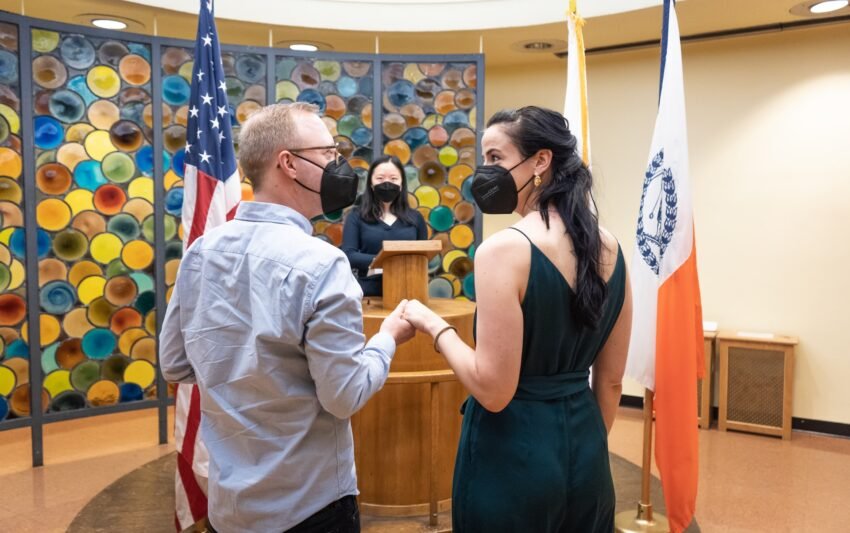
In India, court marriage came to be conducted under a process of the Special Marriage Act of 1954 and continued across the nation. This marriage is organised without any discrimination according to caste, colour, religion, and creed. The couples belonging to two different religions are warmly eligible for a court marriage. It is simple to understand that a court marriage comes with a definition of solemnizing marriage by the law. Marriage is also performed in inter-religious and inter-caste couples. The interested parties directly come to apply under the supervision of the Marriage Registrar just to get a marriage certificate. Before you come for the court marriage, you need to check the eligibility and the others.
Eligibility for the Court Wedding
- Firstly, both parties should not be living as wives/husbands during the marriage.
- The groom should be at least the age of 21 years, and the bride needs to be 18 years of age.
The parties should not have an unsound mind. - They are required to give valid consent during the marriage.
- Neither party can suffer from any kind of mental disorder or insanity.
- Both parties should be free from a prohibited relationship. (The marriage cannot take place within a relationship that is not permitted if their custom allows.)
Documents needed for court marriage
If you are interested in a court wedding, you must have some essential documents that are given below. Take a look below.
- Both parties should sign the application form.
- Both parties’ proof of residence is required.
- The bride and groom need to submit their two passport-size photographs.
- They need to submit a divorce decree or death certificate if the parties have been married before.
- They have to submit the receipt of fees to the District Court.
- Affirmation by both parties should be needed in such a way that they are not in a prohibited relationship defined by the Special Marriage Act.
- In the case of a widow or widower, a municipality death certificate must be submitted.
(For age proof, the parties can submit a birth Certificate/matriculation Certificate/Passport. In need of Residential Proof, they can submit their passport/Voter Id/Electricity or Landline/Telephone Bill or Ration Card.)
Process of Court Marriage
1. Notice of Marriage
At the first time, both parties should give notice to the district marriage officers. It comes to mandate in such a way that the parties to the marriage should have to give notice for the intended marriage in writing, as well as in the form prescribed in the Second Schedule by the marriage officer.
Take a step toward publishing the notice.
The marriage officer will take a step to publish it by affixing it in some conspicuous place at his office after publishing it. There must be a waiting period of up to 30 days if there is an objection. The marriage officer can proceed with the marriage if there is no objection.
2. Objection to marriage
Under Section 7, anyone, either the bride or the groom, can bring an objection to the court marriage within 30 days, and according to that, the marriage can be deemed to violate anything given in section four of the act, but the objection should come in the legal way, not on a personal basis. Under section 8, the marriage officer will come to enquire within 30 days if he receives any objection and solemnise the marriage if the marriage does not go to impede the solemnization of the marriage.
3. Declaration from the parties and witnesses
Before the solemnization of the Court marriage, three witnesses must be required for the court marriage. Both the parties and three witnesses need to do a signature and provide a declaration in the specified form in the third schedule in front of the Marriage Officer.
4. Certification of Court Wedding
After following all steps mentioned above, the marriage officer will come ahead to provide the marriage certificate in front of both parties for the reason of signature. Even three witnesses should come to do the signature. This certificate serves as evidence of the court marriage.
For your comfort, before you go for a court wedding, you should come to know the exact cost of a court marriage.
5. Cost of Court Marriage
It is good to know that the price of a court wedding does not come in the same way as it varies from place to place and state to state. Everyone looks into the fees of the respective place where the marriage is organised.
Now people have an extreme tendency to be interested in court marriage rather than traditional marriage or social marriage. Before you come to be engaged in a court wedding, know the benefits of a court marriage.
Advantages of Court Wedding
- Court marriage is undoubtedly a cost-effective and simpler process.
- It gives both parties, either the bride or the groom, relief regarding the expenses of wedding ceremonies and weddings.
- With the way of court marriage, the bride and groom will have the option of solemnising the marriage in any way according to their wish.
- Through a court marriage, the bride or groom can know the consent of his or her counterpart fairly as both of them need to give a signature.
Court wedding comes to the bride or groom in a concrete process according to the law of the country, and that’s why there must be the presence of a lawyer on behalf of both parties.
Duties of a Lawyer in a Court Marriage
- The lawyer needs to consult with the parties before they attempt to fill out the notice of the marriage. In that case, a matrimony lawyer will be the best one to go ahead with the court marriage procedure.
- An advocate will assist in advising the parties on the marriage according to the applicable law, including the place of registration where the marriage is registered.
- A lawyer needs to ensure the parties are of majority age.
- The advocate will arrange to prepare the necessary documents needed for the process of registration, and this will reduce the burden and time for the parties for the marriage.
- The advocate will set up a convenient time based on the suitability of the parties, including the witnesses, to meet at the office of the marriage registrar for a final document check.
- For further claims, a lawyer will have an opportunity to raise the file if there is any argument between the bride and the groom.
Court Marriage Vs Marriage Registration
Though a group of people has the notion that Court Marriage and Marriage Registration are the same, there are some differences, as given below. Take a look.
| Court Marriage | Marriage Registration |
| Court Marriage takes place in the presence of all family members, including friends & relatives. |
Marriage Registration becomes a certificate that states only that two people are married. |
| This marriage requires a marriage officer and three witnesses. |
Any couple after marriage can be under marriage registration. |
| It comes under the Special Marriage Act of 1954. |
Every couple needs to come under the Marriage Registration Act from the year 2006. |
| The couple need not be of the same religion. |
After marriage, the marriage needs to be registered. |
| The certificate is required for any reason. |
The certificate is required for a bank account or passport. |
Conclusion
Court marriage is completely safe and secure as it is solemnised under the Special Marriage Act, 1954, in a legal environment t. So, court marriage and live a married life happily.
Also Read:
How To Make A Marriage Contract In Simple And Legal Why?
How to the annulment of marriage under Hindu law?