

Introduction:
Marriage is a significant relationship in humans’ lives. But sometimes it becomes a bitter experience for spouses, such as mental differences, misunderstandings, cruelty, or other kinds of problems that make it difficult to continue their happy married life. In that situation, the critical and bitter legal option of a divorce is available for the couple.
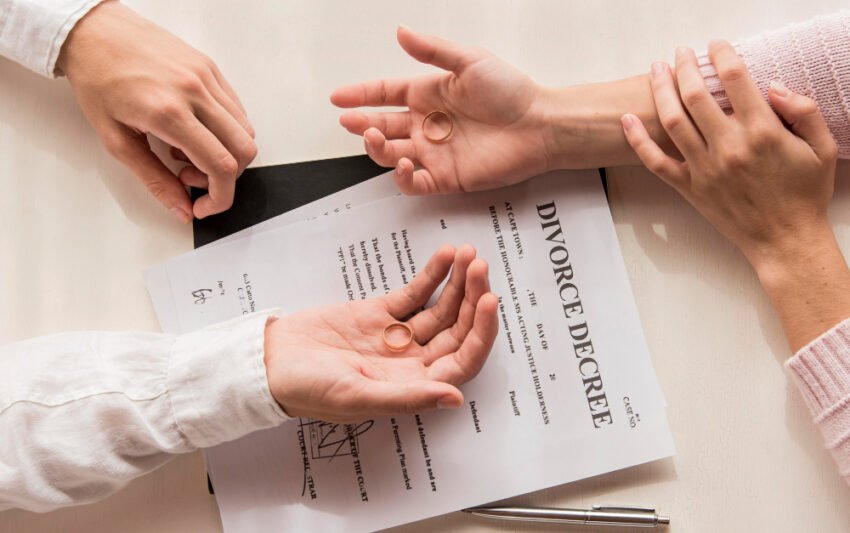
Divorce is a legal process under which the spouse is dissolved their married life by a competent court. After obtaining a divorce decree, the husband and wife no longer have marital status under the law. Their marriage journey will end with the divorce decree.
Specifically in India, divorce laws are different according to the religion of the parties. It also varies under the law where the marriage was solemnised and the facts of the case. There are different laws that govern marriage and divorce in India, such as the Hindu Marriage Act 1955, the Special Marriage Act 1954, the Divorce Act 1869, and other laws which provide provisions related to divorce.
In this article, we discuss what the divorce laws in India are, the grounds for divorce, what is mutual consent divorce and contested divorce, and what the legal provisions are, such as maintenance, child custody and the legal rights of spouses. So please stay tuned and read below.
Key Takeaways:
- In India, divorce is governed by different personal laws and statutory laws.
- Hindu couples are covered under the Hindu Marriage Act, 1955, and this law is applicable to Hindus. If marriage is solemnised under the Special Marriage Act, then that law is applicable to the spouses.
- The spouses can obtain a divorce decree by mutual consent or contested divorce proceedings.
- Section thirteen of the Hindu Marriage Act provides the grounds for divorce for the Hindu, such as cruelty, adultery, desertion, and more.
- Section 13B of the Hindu Marriage Act defines mutual consent divorce; according to that, spouses must live separately for at least one year after the marriage and mutually agree to dissolve the marriage.
- During the divorce proceedings, the court has the power to decide other marriage-related factors such as maintenance, alimony, child custody, asset division, etc.
- The waiting period of one year for filing a divorce petition in court can be waived by the court in the case of exceptional hardship or exceptional Immorality.
- After the passing of the divorce decree by the court, it becomes legally effective, and the aggro party can challenge such decree in the higher court by filing an appeal or following other legal provisions that are provided under the law.
What is Divorce in India?
Divorce is the dissolution of marriage. After obtaining a divorce decree, the spouses end their married life and marital status, and they are no longer husband and wife.
Living separately as husband and wife for many years does not automatically mean they dissolve their marriage. For the dissolution of marriage, the spouses must obtain a divorce decree from the competent court.
Let’s understand with an example. Suppose a husband and wife have been living separately for ten years. According to the law, they are still legally married until their marriage is dissolved by following the legal process.
A divorce degree passed by the competent court. After considering all the legal requirements and if the court is satisfied in that case, it passes a divorce decree.
Types of Divorce in India:
Two types of divorce can be categorised in India, which are listed below:
Mutual Consent Divorce in India:
When spouses mutually agree to dissolve their married life, they can obtain a mutual consent divorce from the court. Under Section 13 B of the Hindu Marriage Act, 1955 applicable to a mutual consent divorce, this section applies to Hindus, Sikhs, Jains, and Buddhist.

How Long Does a Mutual Consent Divorce Take?
The process of obtaining a mutual consent divorce is much easier and quicker compared to the contested divorce process. However, these legal proceedings may take some time; under this process, mainly two hearings are involved. It also refers to mediation. After the amendment came into law, it prescribed a mandatory waiting period of 6 months. During this period, there is a chance for the husband and wife to change their decision. If the husband or wife wants to withdraw the petition or continue their married life, the court will allow it.
But after the mediation period and counselling settlement, if there are no changes in the mindset of the spouses. The matter is kept for final arguments for getting a mutual consent divorce decree.
Factors of Delay in Mutual Consent Divorce:
There are some factors that may cause a delay in mutual consent divorce proceedings. Some of them are listed below.
- The prolonged delay may occur in the negotiation process and set up the negotiable and set up the settlement terms.
- No appearance of the spouses. If a party does not appear on the date of court proceedings, either voluntarily or involuntarily, in that case the court may grant a new date for the proceedings.
- If, for some reason, the lawyer who is hired by the party is not available on the date of the proceedings, it may also result in a delay of the case.
- If a positive approach or support is not given by the other party.
- The court strike, or absence of a judge, may be a reason for not continuing a proceeding on that day, and the case will adjourn to the next available date.
In a mutual consent divorce, can the mandatory period of 6 months be waived?
In the case of Amardeep Singh vs. Harveen Kaur (AIR 2017 SUPREME COURT 4417), the Supreme Court allowed an exception by waiving the mandatory period of 6 months in a mutual divorce. The court observed that, after continued failure of attempts at reconciliation, binding the parties by law for another 6 months is hampering the interest of justice, and the mandatory period of 6 months was waived by the court.
What are the Legal Requirements for a Mutual Consent Divorce?
There are certain grounds for mutual consent divorce that are applicable to spouses. It also introduces new amendments to divorce laws makes more improve legal proceedings.
The Hindu Marriage Act, 1955, Section 13B defines the conditions for a divorce by mutual consent, which are listed below:
- The spouses must have been married for at least one year before the date of filing a mutual divorce petition in the court.
- The spouses must have lived separately for at least one year.
- The spouses are not capable of continuing their marriage as husband and wife.
- The spouses mutually agreed to get a divorce.
In a mutual consent divorce, which is also known as an uncontested divorce. The spouses have to file a divorce petition along with relevant evidence in the family court with appropriate jurisdiction, such as the location where they last lived. After admitting the remission of the petition record the statements of the husband and wife and adjourns the case for a period of 6 months. After completion of that period, the court starts hearing the matter and confirms whether the spouse consents to dissolve the marriage.
After considering the statements of oath given by the husband and wife and the relevant evidence. If the court is satisfied, and think of it divorce decree can be passed.
In proceedings for a mutual consent divorce, the spouses must have mutually settled the other relevant factors, such as child custody, visitation rights, maintenance, alimony, asset division, etc. The spouses must be mentioned in the divorce petition.
The core aspect of mutual consent divorce is to end the marriage with ease, peace, quickly, and with an effective mutual settlement. It benefits the spouses because it reduces mental and financial stress. It is also more cost-effective than a contested divorce.
Contested Divorce in India:
If the husband or wife does not agree to the divorce and either of them files a divorce petition in court without taking the consent of the other, it is called a contested divorce. Because the consent of the spouses is missing in the matter.
The proceedings of a contested divorce become more stressful, bitter, time-consuming, and costly for the spouses.
The Hindu Marriage Act, 1955, Section 13 defines the grounds for a contested divorce, that is listed below:
- Adultery
- Leprosy
- Conversion
- Cruelty
- Venereal disease
- Mentally unstable
- Resumption of cohabitation
- Whereabouts are not known for more than 7 years.
- Non- restitution of conjugal rights.
Based on any of the above grounds, the divorce petition can be filed in India. The petitioner must be provided heavy supporting evidence on the ground under which the petition is filed for a divorce.
After leading of evidences of the husband and wife, the court can pass a divorce decree. The court may also decide other marriage-related factors, such as child custody, visitation rights, asset division, maintenance, alimony, etc. If the aggrieved party is not satisfied with the court order, they have the right to challenge the divorce decree in the higher court by filing an appeal, or follow other legal procedures.
Conclusion:
There are two types of divorce applicable in India: mutual consent divorce and contested divorce. As per the suggested name, mutual consent divorce is a speedy, easy, quicker, less time-consuming, and less stressful process because the spouses mutually agree. It is a better way to dissolve the marriage with mutual understanding and consent by the husband and wife. In contrast, a contested divorce becomes more stressful, bitter, time-consuming, and costly for the spouses.